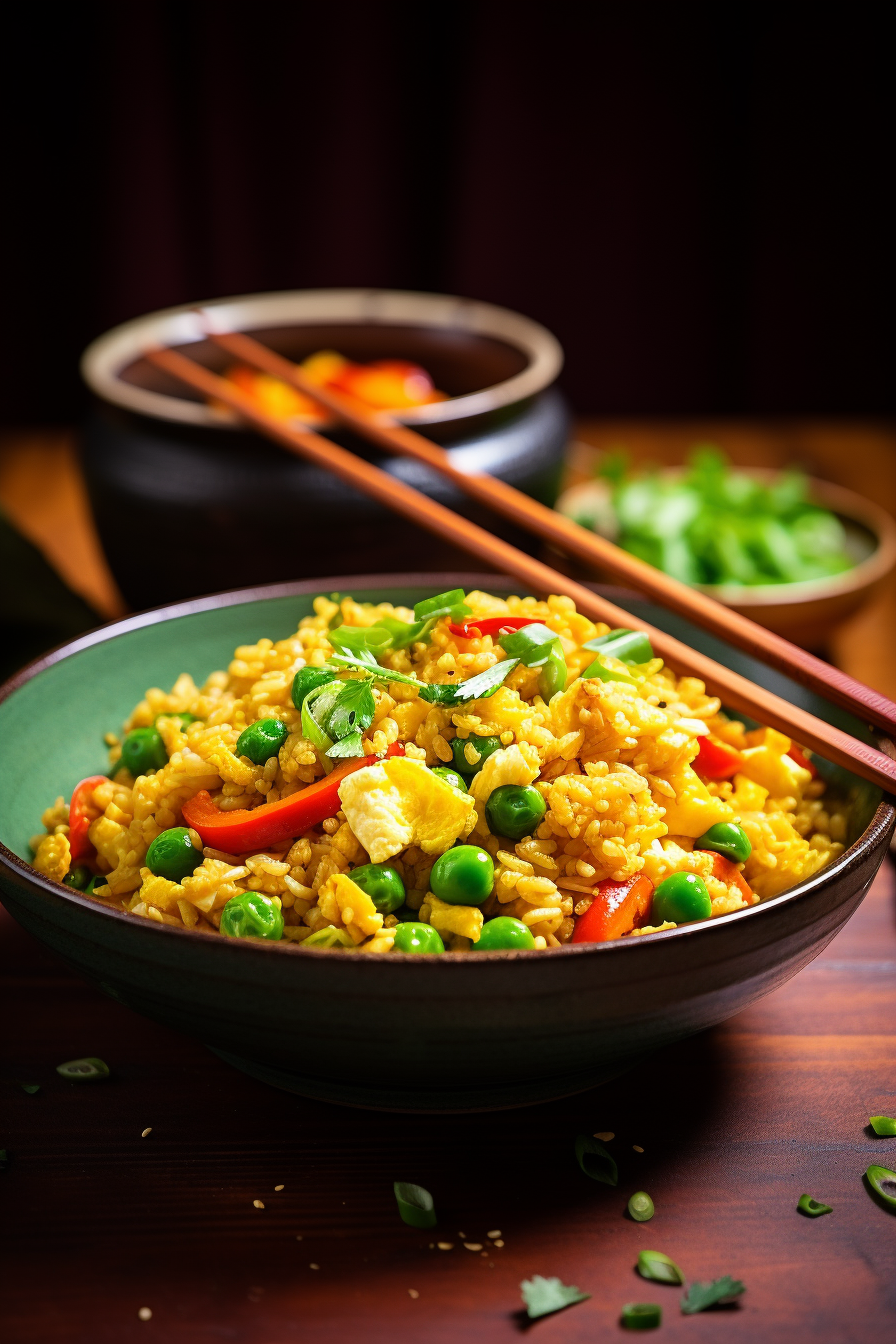
Low-Carb Japanese Cauliflower Fried Rice
This Low-Carb Japanese Cauliflower Fried Rice is a tantalizing twist on a classic dish, perfect for keto dieters and anyone looking to reduce their carbohydrate intake without sacrificing flavor. With the aromatic presence of ginger and sesame, combined with the satisfying textures of cauliflower and vegetables, this dish is a celebration of flavors that will transport your taste buds to the streets of Tokyo.
Servings 4 servings
Calories 175kcal
Equipment
- Food processor
- Large skillet or wok
- Wooden spoon or spatula
- Cutting board
- Knife
- Measuring cups and spoons
Ingredients
- 1 medium head cauliflower riced (approximately 500g/1.1 lbs)
- 2 tbsp sesame oil (30 ml)
- 1 large carrot diced (about 100g/3.5 oz)
- 1 red bell pepper diced (about 119g/4.2 oz)
- 2 green onions thinly sliced (about 15g/0.5 oz)
- 1 tbsp ginger minced (about 6g/0.2 oz)
- 2 cloves garlic minced (about 6g/0.2 oz)
- ¼ cup soy sauce or tamari for gluten-free option (60 ml)
- ½ cup frozen peas (about 70g/2.5 oz)
- 2 large eggs beaten
- Salt and pepper to taste
- Sesame seeds for garnish (optional)
Instructions
- Begin by preparing the cauliflower rice. Remove the core and leaves from the cauliflower and chop into florets. Place the florets into a food processor and pulse until the mixture resembles rice grains. Be careful not to over-process.
- Heat a tablespoon of sesame oil in a large skillet or wok over medium-high heat. Add the diced carrot and bell pepper, and sauté for about 3-4 minutes until they start to soften.
- Stir in the green onions, ginger, and garlic, and cook for an additional 2 minutes, ensuring they don't burn and are fragrant.
- Move the vegetables to one side of the skillet and add the remaining tablespoon of sesame oil. Pour in the riced cauliflower, and stir to combine everything. Cook for about 5 minutes, allowing the cauliflower to become tender.
- Make a well in the center of the skillet and pour in the beaten eggs. Scramble the eggs and then mix them throughout the cauliflower rice.
- Add the frozen peas and soy sauce, stirring until all the ingredients are well combined and the peas are warmed through. Season with salt and pepper to taste.
- Once everything is heated through and the cauliflower rice is tender with a slight bite, remove from heat.
Notes
For added protein, consider topping your fried rice with grilled chicken, shrimp, or tofu.
Keep an eye on the cauliflower rice to prevent overcooking; it should be tender but not mushy.
Feel free to customize the level of soy sauce to your taste preference, and use tamari if you're following a gluten-free diet.
This dish is best served fresh but can be stored in an airtight container in the refrigerator for up to two days. Reheat gently before serving.
Nutrition
Calories: 175kcal | Carbohydrates: 14g | Protein: 8g | Fat: 10g | Cholesterol: 93mg | Fiber: 5g | Net Carbs: 9g